

Event Details
Topic description / abstract:
Homo sapiens appears unique because our evolutionary processes are themselves uncommon. Researchers have speculated that an evolutionary transition in our species may explain both facts. But there is confusion about the role of adaptive culture in human evolution and empirical research on the topic is lacking. In this talk, I will argue that a more mature science of human evolutionary transition is possible, and can be beneficial for humanity.
Current research on human evolutionary transitions suffers from vague definitions and diverse explananda, leading to conflicting conclusions about whether a human transition has been stalled by genetic mixing or completed through the emergence of institutions or large-scale societies. To resolve this confusion, I introduce the Evolutionary Transition in Inheritance and Individuality (ETII) hypothesis. This hypothesis posits that human evolution is uniquely characterized by a dual shift both the primary mechanism of inheritance (from genes to culture), and in the most significant level of organization (from individuals to groups), a process driven by the features of human cultural adaptation. I show how this framework explains why genetic group selection is not a necessary precondition for an evolutionary transition in human individuality.
I argue that an empirical science of human evolutionary transitions is possible now. As an example, I detail the testable predictions arising from ETII theory, and review the possibilities and challenges for empirical research. I review evidence documenting how group-level cultural adaptation now frequently determines evolutionary outcomes through the process of cultural pre-emption, forestalling natural selection on genes.
I further argue that human evolutionary transitions research and theory has value in integrating and simplifying current disciplinary theories of human society, evolution and uniqueness, and has potential as an applied theory of social change. As an example, I apply the theory to explore the potential for beneficial human outcomes in the Anthropocene.
Finally, I suggest that studying human evolutionary transitions entails ethical obligations. I propose that research to describe the potential emergence of a cultural superorganism must on one hand, avoid ascribing moral valence to contingent evolutionary paths but on the other, should always be accompanied by a rigorous program of applied ethics.
Biographical note:
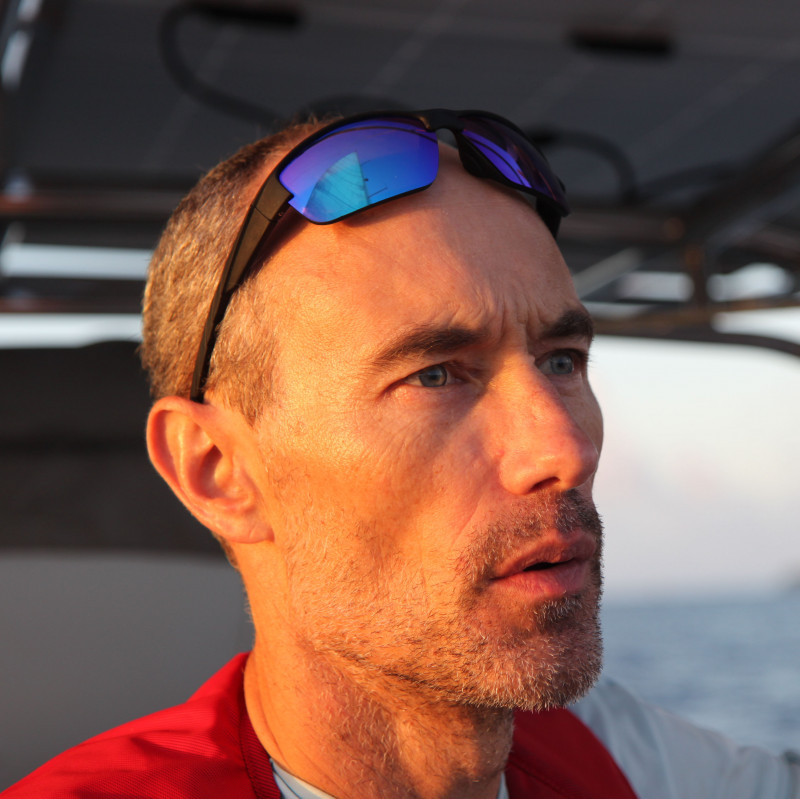
Dr. Tim Waring is an associate professor of applied cultural evolution at the University of Maine. He studies how human cultural change can determine social and environmental outcomes and drive long-term human evolution. Waring’s work ranges from theoretical model development and fundamental research to applied science, and from individual behavioral choices to the evolutionary futures of homo sapiens. He is driven by a fundamental question: how do human groups solve collective problems? Waring uses this question to support three distinct research programs in sustainability, organizational change, and human evolution.
Sustainability. Environmental challenges are often problems of collective action. Waring has developed a theory which proposes that sustainable human systems evolve when the balance of competing evolutionary forces across levels of organization favors group-level cultural adaptation. This theory helps explain how and when cooperative governance emerges to solve collective environmental challenges from fish stock depletion to pollution and deforestation. The theory has been simulated and applied to case studies around the world. Related ongoing empirical research on industrial agriculture has used the lens of cultural evolution to study how culture adapts in the context of in the face of climate change.
Organizational Change. The same theory helps explain the evolution of organizations and human social structure. Dr. Waring uses multilevel cultural evolution to study the evolution of organizations, especially cooperatives. This research combines simulation models, measures of altruism and economic reciprocity among cooperative members, with historical reconstruction of the transmission of key institutions over 170 years among English-speaking cooperatives worldwide. The results help us understand the processes that shape organizational change in any organization.
Human Evolution. Dr. Waring also studies the role of culturally organized groups in long-term processes and patterns in human evolution. This has led to an integrative theory that human evolution is characterized by an accelerating evolutionary transition from individual-level genetic evolution to group-level cultural evolution. With collaborators, Waring is working to model and test the novel predictions of this theory with empirical datasets. The theory has potentially dramatic implications for the evolutionary futures of homo sapiens.
An Applied Science of Beneficial Social Change. Finally, Dr. Waring is also a pioneer in the development of an applied science of cultural evolution for beneficial social change, and leads a global applied research network on the topic.
